Resources
October 5, 2026
The high market volatility of the first half of the year continued in the third quarter as rising inflation, the Iran war, and rising interest rates combined to cause uncertainty in both the stock and the fixed income markets. Equity markets ended the third quarter with modest gains. Fixed income markets struggled as higher interest rates caused bond prices to drop across the board. So far, higher interest rates have not had a negative effect on the earnings of most companies. This, and improving data on new job creation, were about the only sources of good news for the quarter. Lost in the torrent of news during the quarter is the fact that the U.S. economy just isn’t growing much. In the first quarter, GDP grew at an annualized rate of 2.1%. This dropped to just 1.5% for the second quarter. It looks like third quarter growth will come in just over 2%. Most estimates we’re seeing for the entire year are for growth of less than 2%. With inflation at 3.5% and the economy growing less than 2%, this is a problem. To combat climbing inflation, the Fed increased the fed funds rate by a quarter point in mid-September. More importantly, they indicated that more rate increases are likely. This is a big change in direction from the beginning of the year when they were expecting multiple rate cuts. The good news is that the Fed seems to be committed to reducing inflation. The bad news is that there is likely going to be some short-term pain to get that done. A cautionary tale unfolded in August, as the hedge fund Situational Awareness collapsed, dropping by more than two thirds, and forcing a last-minute sale of their remaining assets to another hedge fund to avoid a total wipe out. This fund, managed by 24-year-old Leopold Ashenbrenner, was $45 billion at its peak, and invested in AI companies. He also took short positions in software companies. The fund put up spectacular returns in the past couple of years. Here’s the problem: when you’re getting huge returns, it’s because you’re taking huge risks. That, by itself, is not a problem, but that risk must be managed, and that wasn’t happening. Another problem is that the fund had 400% leverage. Bad idea. That leverage, combined with a concentrated portfolio, blew up the portfolio because two of its holdings moved against him in a big way. When two stocks moving against you in one day makes your portfolio collapse, proper risk controls are not in place. Hopefully Leopold has learned how to properly manage a portfolio. Hopefully the investors who gave him $45 billion have learned that incredible investment returns are not possible without also taking the risk of losing everything. As Warren Buffett famously said, “Only when the tide goes out do you discover who has been swimming naked.” For the remainder of the year, we will be keeping a close eye on inflation, interest rates, and the GDP. Those three things will likely determine where the markets go from here. Wabash Capital
July 2, 2026
High market volatility continued in the second quarter as economic and geopolitical uncertainty combined to cause anxiety for investors. After a large sell-off in March, stocks rallied during the second quarter, with the Technology sector once again leading the way. Fixed income markets, wary of higher interest rates and rising inflation, had modest gains for the quarter. With 2026 halfway over, there are many issues affecting the economy and the markets that investors will need to navigate. In May of this year, Kevin Warsh became the chairman of the Board of Governors of the Federal Reserve System. He assumes this position at a critical time for the global economy. With inflation rising to multi-year highs, all eyes are on the Fed to find out what it will do to address the problem. The Federal Reserve has a dual mandate: 1. Maximize employment; 2. Price stability. After his first FOMC meeting as chairman, Warsh said, “This committee will deliver price stability.” A full one third of Fed officials expect multiple interest rate increases this year. This is a major change from the beginning of the year, when most were expecting multiple rate cuts this year. Inflation has been above the Fed’s target of 2% for more than five years. They have indicated that the target will not change. Grab your popcorn, because it looks like the battle in Washington over interest rates is about to heat up. New job creation has shown some improvement after under performing for over a year. Oil prices, a very important part of our economy, have dropped, which should help with the inflation battle, although oil is far from the only cause of rising inflation. After disappointing GDP growth numbers last year and the first quarter of this year, there will be a lot of attention to second quarter numbers. Increases in productivity due to artificial intelligence are helping offset an increase in workers leaving the workforce. The U.S. economy, driven my multiple forces, is undergoing substantial changes. Alan Greenspan passed away in June at the age of 100. As chairman of the Federal Reserve for more than 18 years, Greenspan served under four presidents and chaired the Fed during very robust economic growth and dropping inflation. While he wasn’t totally responsible for the economic expansion of the 1980’s and 1990’s, he gets a lot of credit for the improvements after the difficult decade of the 1970’s. The Fed’s 2% inflation target? That was Greenspan’s doing. Most people couldn’t name the current chairman of the Fed, but almost everyone knew who Alan Greenspan was. There will be a lot to pay attention to in the third quarter. Inflation and GDP will be watched closely by Wall Street in the second half of the year. If you have any questions about the economy or the markets, please do not hesitate to contact us. Wabash Capital
April 6, 2026
After a decent start to the year, markets dropped sharply during March with the beginning of the war in Iran. As the fighting expanded across the Middle East, selling intensified, with all major equity indices now in correction territory. Fixed-income markets followed equities down as interest rates climbed across the board. The price of oil jumped, as it always does when wars break out in the Middle East, bringing fears of a global economic recession. Recession fears are well placed, as oil shocks almost always cause one. The price of 96% of American products are affected by rising oil prices. It is important to remember that oil is traded on global energy markets. It does not matter that the U.S. is the world’s largest producer of oil. Disruptions to the supply of oil anywhere in the world upend the entire market for oil, causing prices to rise. The longer the war lasts, the higher the price of oil will go. If the war ends soon, we will probably see a jump in equity prices, but we still must deal with some significant issues. Chief among these is a U.S. economy that does not look as healthy as we would like. GDP grew at an anemic .7% rate in the fourth quarter of last year. For the entire year of 2025, GDP grew at a rate of 2.2%, well below the average of the past eighty years. The war and resulting jump in oil prices will likely affect GDP for the first quarter of this year. Another area of concern is the jobs market. The U.S. economy produces 200,000 new jobs on average each month. Less than 600,000 new jobs were created in all of 2025, and most of those were in the first quarter. The economy lost 92,000 jobs in February of this year. The lack of job creation, combined with a sluggish economy, is definitely a concern for investors. Even with this current sell-off, stocks remain at very high valuations by historical standards. While the markets appear to be oversold in the short term, we still need to see lower valuations before stocks look attractive on a longer-term basis. It remains to be seen whether the current problems are the catalyst for a deeper sell-off. Economic and market forces on the global stage can change quickly, and while the current change has been a negative one, positive changes can happen quickly as well. Increases in productivity due to advances in technology are not going away. Geopolitical disruptions don’t last forever, and changes in the political landscape are never-ending. Successful investing requires a long-term approach and the ability to look past shorter-term problems. While these problems are very often severe, history tells us that things will improve. We are always happy to review your investments with you, so please contact us if you would like to discuss your portfolio.
March 19, 2026
March 12, 2026
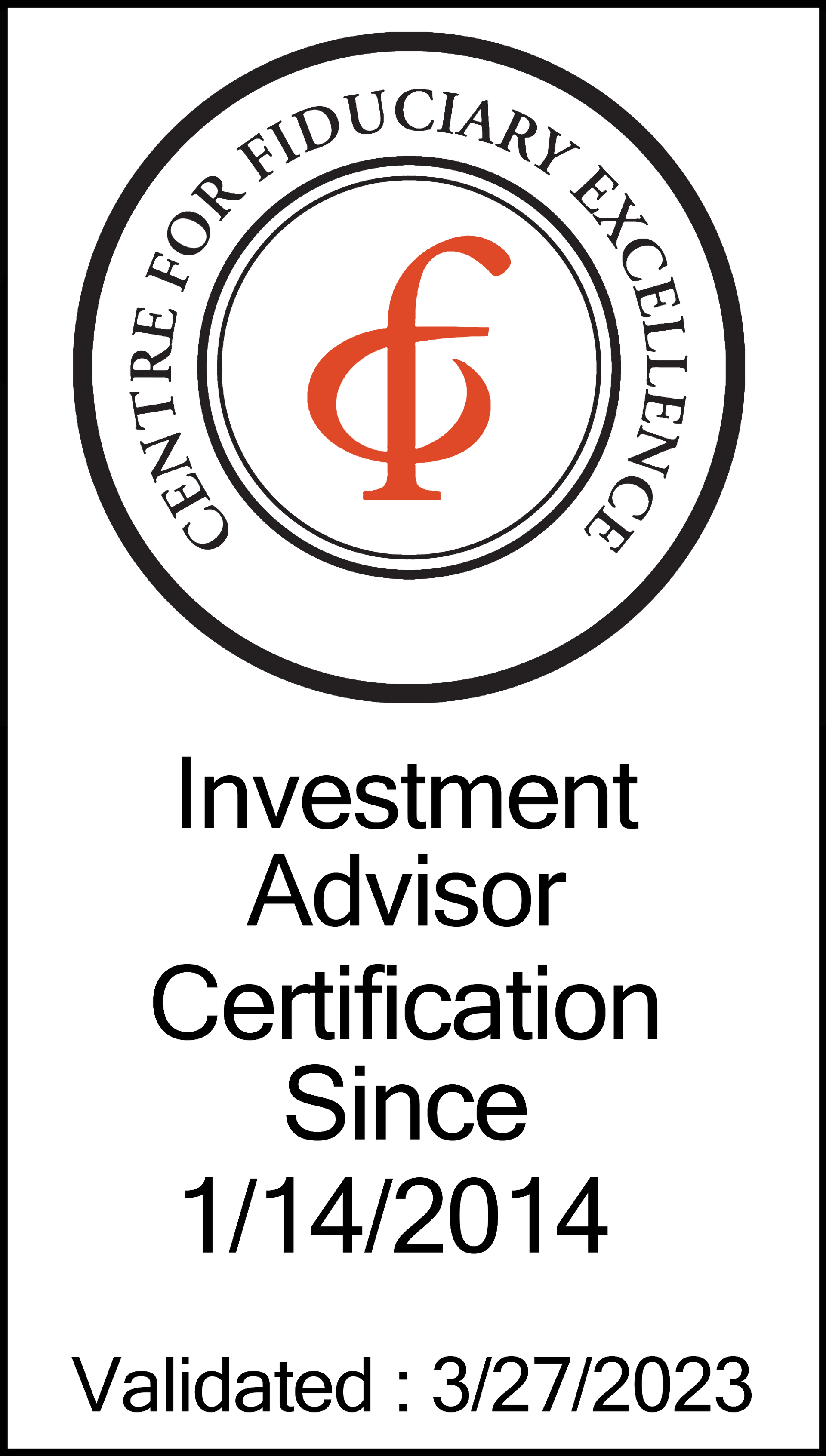
Adherence to a global standard of fiduciary excellence officially marks a commitment to acting in the best interest of investors. Terre Haute IN – March 2026 – After undergoing a thorough and independent assessment of investment management processes, investment strategy implementation, and other fiduciary practices, Wabash Capital today announced formal achievement of Centre for Fiduciary Excellence (CEFEX®) certification from Broadridge for the 13 th year. This makes Wabash Capital part of the elite group of nearly 250 firms from around the world to successfully complete the independent certification process. Part of the rigorous evidence-based assessment included successfully demonstrating adherence to documented and legally substantiated best practice fiduciary standards. The annually renewed certification signifies an ongoing commitment to providing consistent objective advice that’s in a client’s best interest – both at the institutional and individual levels. Don Edwards, President of Wabash Capital, Inc. said, “We are proud to be a CEFEX certified investment firm. This certification assures our clients that we are keeping up with the best practices in the industry. Our clients also know that we are a Fiduciary Advisor, meaning we are obligated to act in their best interest.” The CEFEX certification program is based on the International Standards Organization (ISO) 19011: Guidelines for auditing management systems. The standard, “Prudent Practices for Investment Advisors” is substantiated by legislation, case law, and regulatory opinion letters from the Employee Retirement Income Security Act (ERISA), the Investment Advisers Act of 1940, the Uniform Prudent Investor Act (UPIA), the Uniform Prudent Management of Institutional Funds Act (UPMIFA) and the Model Management of Public Employee Retirement Systems Act (MMPERSA) in the U.S. According to the Vice President, Centre for Fiduciary Excellence, Carlos Panksep, “Maintaining certification requires a continued adherence to the industry’s best practices. This is verified through our annual renewal assessment.” Wabash Capital is specifically certified for Investment advisory and management services for endowments, foundation and retirement plan clients serving in an ERISA 3(21) advisory role and/or ERISA 3(38) Investment Management for official registration for Wabash Capital can be see www.wabashcapital.com as well as the Independent Assessment Report can be viewed here. To learn more about CEFEX certification visit cefex.org. About Wabash Capital, Inc. Company Overview: Founded in 1997, Wabash Capital is dedicated to maintaining and growing the financial resources of our individual, institutional and 401(k) & 403(b) retirement plan clients. As a privately held fee only advisor, we offer independent financial guidance designed to fulfill each client's unique needs and priorities. We establish a fiduciary relationship with each client, providing a personalized service unencumbered by third party compensation arrangements. This allows us to focus entirely on helping our clients achieve their financial goals. Our Mission Statement: At Wabash Capital, we will establish trust-filled client relationships to support our role as an advisor. We will listen to our clients’ needs and provide personalized investment advice that leads them to positive financial outcomes. About Broadridge Broadridge Financial Solutions (NYSE: BR), a global Fintech leader with over $6 billion in revenues, provides the critical infrastructure that powers investing, corporate governance, and communications to enable better financial lives. We deliver technology-driven solutions that drive business transformation for banks, broker-dealers, asset and wealth managers and public companies. Broadridge's infrastructure serves as a global communications hub enabling corporate governance by linking thousands of public companies and mutual funds to tens of millions of individual and institutional investors around the world. Our technology and operations platforms underpin the daily trading of more than $10 trillion of equities, fixed income and other securities globally. A certified Great Place to Work®, Broadridge is part of the S&P 500® Index, employing over 14,000 associates in 21 countries. For more information, please visit broadridge.com .
December 31, 2025
Markets surged in 2025 amid AI dominance, volatility, and steady economic growth. Read Wabash Capital’s full year-end investment review.
October 2, 2025
The equity market and the fixed income market both added to their year-to-date gains during the third quarter. Rapidly deteriorating employment data encouraged the Federal Reserve to cut interest rates during the quarter, despite the inflation rate remaining above its target. Economic data in September suggests GDP is growing faster than expected, leading many economists to question the need for further rate cuts. Stocks and bonds both rallied after the rate cut, with the hope that economic growth will continue and inflation will subside. The Federal Reserve is currently in a very challenging position. Economic data is all over the place. Higher inflation and economic growth that exceeds expectations would suggest keeping interest rates steady or increasing them. The disappearance of new job growth would normally call for rate cuts. When you add increased political pressure and media coverage, the job becomes even more difficult. In addition to the employment problems, the economy is also experiencing a substantial decrease in year-over-year average hourly earnings, as well as four straight months of manufacturing job losses. Despite the low rate of new job creation, the unemployment rate, while higher than it was two years ago, is still quite low relative to historic averages. It is definitely a mixed bag of economic data. Small-cap stocks, as measured by the Russell 2000 Index, closed at an all-time high during the third quarter, the first all-time high for this index since March 2021. This was the second longest streak without a new high in the index’s history, behind only the bear market following the dot-com market bust. It is also worth noting that the price-to-sales ratio of the S&P 500 is at its highest level since 1990 and is double its average for the past 35 years. It is also more than a point higher than its peak during the dot-com bubble in March 2000. Current market valuations, by all measures, are extremely high and are unsustainable at these levels. The current stock market rally consists of a relatively small number of stocks that are doing very well, while the broader market is flat. Markets like this can mask economic problems and make it seem that things are better than they are. The employment slowdown may be temporary, but investors will be keeping close watch on what happens between now and the end of the year. Since 1928, the S&P 500 has risen in the fourth quarter 74% of the time, the most of any quarter. Fortunately, the extreme volatility earlier in the year has improved, and market movements have been more measured. For investors, 2025 has been a very interesting year. Wabash Capital
July 17, 2025
Wabash Capital Earns Renowned Certification for Fiduciary Excellence Adherence to a global standard of fiduciary excellence officially marks a commitment to acting in the best interest of investors.
July 10, 2025
It is impossible to overemphasize how crazy the first half of this year was for the capital markets. Stocks, after a negative first quarter, started the second quarter by plummeting (a word we don’t like and rarely use, but fitting here) in the first week of April after massive tariffs were imposed on imported goods. The S&P 500 Index quickly dropped to near bear market territory, before a dizzying climb after the tariffs were paused. High volatility persisted for the remainder of the quarter, as shifting trade policies caused uncertainty among investors. Bonds also experienced significant fluctuations as fixed-income markets adjusted to the shifting economic landscape. Looking at the numbers at the halfway point of 2025, both stocks and bonds have produced modest gains year to date. It is difficult to forecast what the second half of the year will look like with the uncertainty about tariffs. Most firms are like we are; one forecast with tariffs and one without. The Federal Reserve is projecting economic growth of 1.4% for 2025 and 1.4%-1.8% growth through 2027. These estimates have been lowered from previous outlooks. The Fed is also forecasting an inflation rate of 3.1% for this year, quite a bit higher than its target rate of 2%. As long as the Fed expects inflation to rise, it is difficult to imagine that it will lower interest rates. Some Fed members argue that data showing a slowing economy justifies lower rates. These are outnumbered by those who are hawkish on rates. GDP contracted in the first quarter but is expected to be positive during the second quarter. The elephant in the room is the high valuation of the equity markets. Current stock prices relative to earnings are nearing those last seen during the dot com bubble in 1999. We all like rising stock prices, but there must be earnings to support those prices. Without sufficient earnings, market gains become untenable and are destined to fall. It is impossible to know at what point stocks are too top-heavy, but anytime we approach 1999 valuations, we should all be concerned. Prince, in his song 1999, sang, “Life is just a party, and parties weren’t meant to last.” We would advise that the same holds for highly valued stock markets. Consumer confidence has dropped in six of the past seven months. We are just beginning to see a drop in spending, and this is an area that will be closely watched in the months ahead. Likewise, inflation and employment data are important to watch. The Fed is in a tough spot. If inflation rises while the economy slows, which is possible, any missteps will have outsized consequences. The past five years have been challenging for American businesses, and they have been great at adapting and growing despite the difficult environment that included a global pandemic and high inflation. High valuations and uneven trade policy concern us in the short term, but we remain bullish in the long term. Wabash Capital